[Avg. reading time: 4 minutes]
Static vs Dynamic
Statically Typed
- Type checking happens at compile time
- The compiler verifies whether operations on variables are valid before execution
- Many errors are caught early, during development
- Types are usually explicit, sometimes inferred
int a = "Hello";
- This fails at compile time
- The program never runs
The above statement will result in an error during compile time itself.
Common statically typed languages
C / C++ / Go / Haskell / Java / Scala / Rust
Trade-offs
- Safer refactoring
- Better tooling and IDE support
- More upfront thinking required
Dynamically Typed
- Type checking happens at runtime
- Variables do not have fixed types
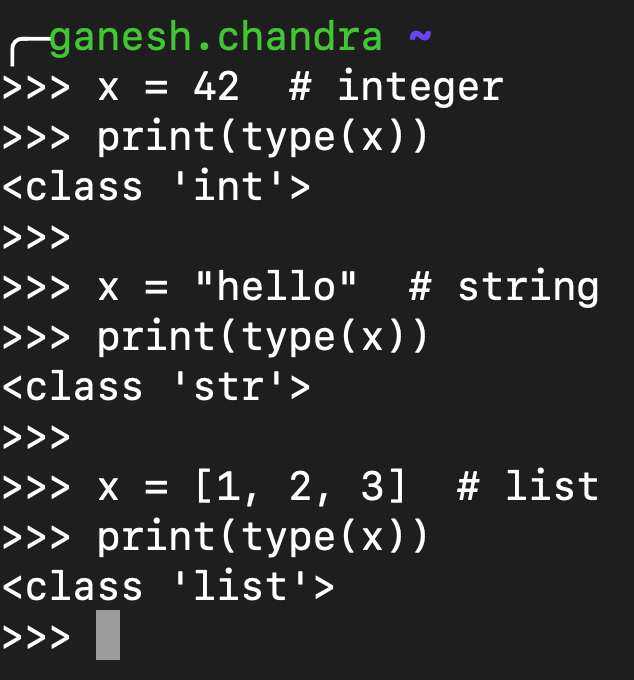
- The same variable can reference different types over time
- Faster to write, easier to prototype
a = "Hello"
a = 10
- This is valid
- Errors appear only if invalid operations are executed
Common dynamically typed languages
Python / Ruby / Erlang / JavaScript / PHP / Perl
Trade-offs
- Faster iteration
- More runtime flexibility
- Requires strong testing discipline
Simple Python example
Sum Up
- Static does not mean bug-free
- Dynamic does not mean unsafe
- Most modern languages blur the line
- Type inference
- Optional typing
- Runtime checks plus static analysis